
Verifiable licensing and insurance
Any claim about licensing, bonding, or insurance must be accurate and specific to the state or trade, since these are easy for a buyer to check and costly to misstate.

Home services
For plumbing, electrical, appliance, and multi-trade operators, the bottleneck usually is not demand. It is what happens after the call rings.
The vertical
A home services company rarely sells one thing. Plumbing, electrical, appliance repair, handyman work, and general contracting often live under one brand, one dispatch board, and one crew calendar. That structure changes the marketing problem. You are not optimizing a single funnel, you are balancing demand across trades and time slots so that a technician is never idle and never overbooked. Marketing that generates more calls than the business can answer or dispatch is not a win, it is wasted spend and a bad review waiting to happen.
Demand splits cleanly into emergency and scheduled work, and each behaves differently. A burst pipe or a dead water heater produces a same-day, high-urgency search with almost no comparison shopping. A kitchen faucet swap or a routine inspection produces a slower, more price-sensitive search with real comparison across two or three companies. A home services marketing program has to serve both without treating them the same way, because the page, the offer, and the call handling each need to match the urgency level of the searcher.
The real conversion bottleneck for most home services companies is not the ad or the page, it is the phone. A missed call, a slow answer, or a dispatcher who cannot quote a rough timeframe loses the job to whichever competitor answers next. This means marketing and operations are tightly coupled here in a way they are not in most industries. A campaign that drives calls into a phone line that is already saturated during a cold snap or a heat wave is actively hurting the business, not helping it.
Because most jobs are local and time-sensitive, service area page architecture and local search visibility carry more weight than brand marketing. Buyers search by neighborhood, by trade, and by urgency in the same breath, and Google's local results and Local Services Ads program largely decide who gets seen first. Technician-level reviews, once a minor detail, now function as a trust signal that buyers read closely before calling, especially for in-home work involving strangers with tools.

Demand behaviour
Home services searches split sharply between emergency urgency and planned, comparison-driven scheduling.
Emergency searches are short, local, and immediate. Someone with a flooding basement or a broken garage door is not reading reviews for twenty minutes, they are calling the first credible result they see, usually from a phone, usually within minutes of the problem starting. These searches spike with weather, time of day, and even day of week, and a company that cannot answer fast during those spikes loses jobs it already paid to generate.
Scheduled and planned work looks completely different. A homeowner planning a water heater replacement or a whole-home rewiring project searches earlier, compares multiple companies, checks reviews, and sometimes requests a few quotes before committing. This buyer has time, so trust signals, transparent pricing language, and clear service descriptions matter more than instant response.
Across both patterns, mobile dominates and local intent dominates. Searchers rarely browse a homepage, they land on a service and city combination page, check reviews, glance at the map pack, and decide within seconds whether to call or keep scrolling. A category with a crowded map pack and heavy Local Services Ads presence means visibility at the category level, not just the brand level, decides who gets the call.
Constraints
Trust in home services is built on licensing, insurance, and the discomfort of letting a stranger into your home.
Home services marketing has to be honest about what a company can actually deliver, because overpromising on response time or pricing creates same-day disputes that show up in reviews within hours. Claims about licensing, bonding, and insurance need to be accurate and easy to verify, since buyers letting a technician into their home are evaluating risk as much as price.
Because demand often exceeds capacity during weather-driven spikes, marketing has to be paired with a real understanding of dispatch limits. Promising an emergency response the business cannot staff for creates the exact kind of broken expectation that damages a local reputation quickly, given how visible reviews are in this category.
Any claim about licensing, bonding, or insurance must be accurate and specific to the state or trade, since these are easy for a buyer to check and costly to misstate.
Emergency response claims should reflect actual dispatch capacity, not aspirational marketing copy, because a missed promise during a crisis becomes a public review immediately.
Reviews increasingly reference specific technicians by name, so reputation management needs to work at the individual level as well as the company level.
Campaigns should be paced against dispatch and crew capacity so that spend does not generate more calls than the business can realistically answer or schedule.
Where the leverage is
We run nine pillars. These are the ones that move this vertical, and the reason each one earns its place.
Service area page architecture, organized by trade and neighborhood, is the backbone of how home services companies get found for both emergency and planned searches. This is the highest-leverage, most durable channel for a multi-trade operator.
Explore SEOLocal Services Ads and search campaigns need to be paced against real dispatch capacity, especially during weather-driven demand spikes, so paid media has to be managed as an operations lever, not just a growth lever.
Explore Paid MediaBuyers ask direct, answerable questions about pricing ranges, response times, and service coverage, and being the extractable answer in AI search results captures demand before a competitor's page even loads.
Explore AEOBecause emergency and scheduled demand behave so differently, call tracking and conversion attribution have to separate the two to tell whether marketing spend is actually filling gaps in the schedule.
Explore AnalyticsCosts vary by trade, urgency, and scope, so most reputable companies quote after a diagnostic visit or phone assessment rather than a flat number online. Emergency calls typically carry higher rates than scheduled appointments.
Conversion
In home services, the conversion moment is the phone call, and how it is answered matters more than how it was generated.
A well-ranked page or a well-targeted ad only sets up the moment that actually decides the job: a live person answering the phone with the ability to give a rough timeframe and a credible next step. Companies that route calls to voicemail or slow call centers lose jobs they already paid to generate, regardless of how good the marketing was upstream.
Conversion also depends on matching the offer to the urgency. An emergency searcher wants a callback time and a dispatch confidence signal, not a long-form quote request. A planned-work searcher wants enough detail to trust the company before committing to a call, since they are often comparing two or three options.
Call answer rate and speed to answer are the real conversion metrics in this vertical, since a missed call during peak demand is a lost job regardless of ad performance upstream.
Emergency service pages should lead with response capability and a clear call path, while planned-work pages can carry more detail, pricing context, and comparison-friendly information.
Reviews that name a specific technician build trust faster than generic company reviews, and actively soliciting them after a job closes compounds visibility in local search over time.
Marketing spend and lead volume should flex with crew and dispatch capacity so that generated demand converts into scheduled work rather than voicemail and frustration.
Live work
Real properties, running in production. Click any of them and judge the work directly.
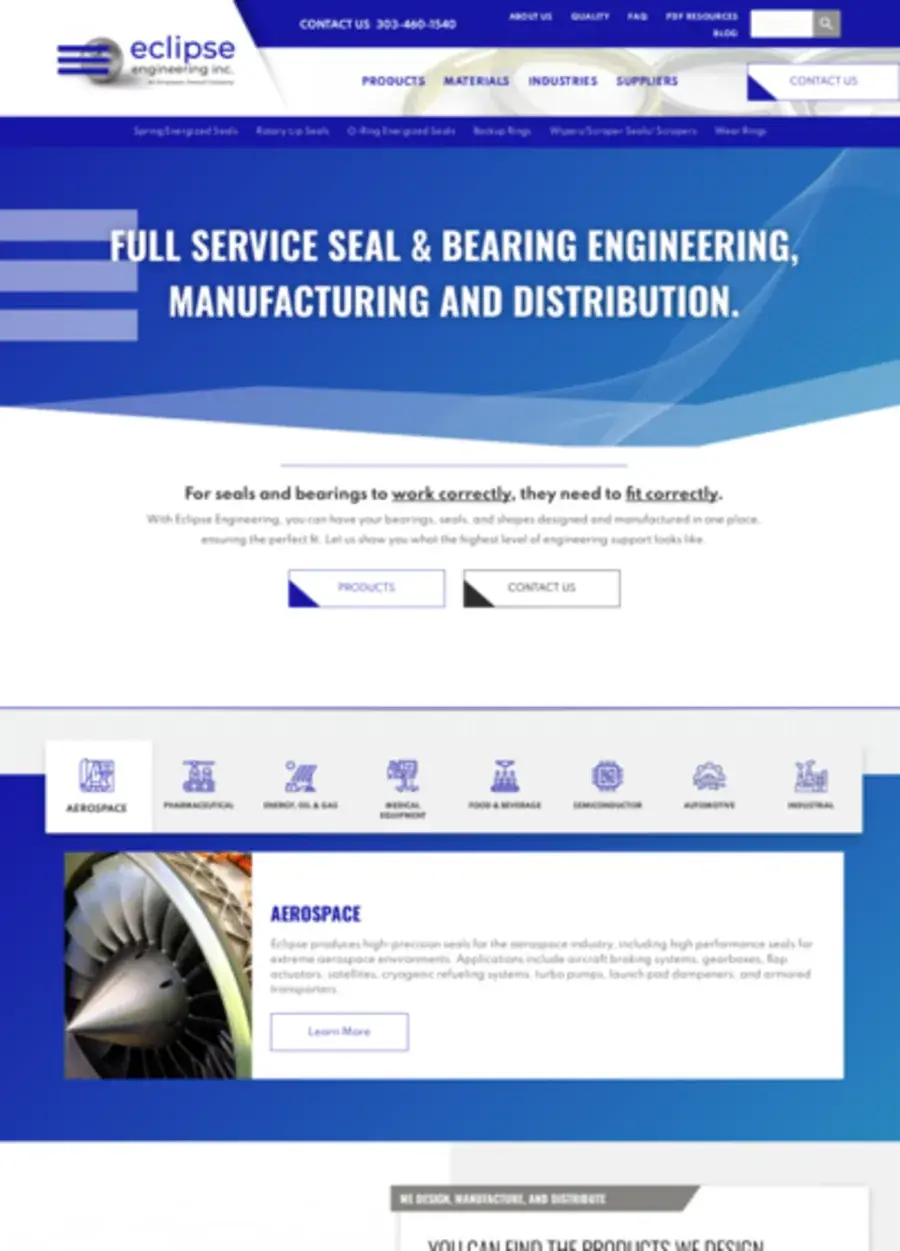
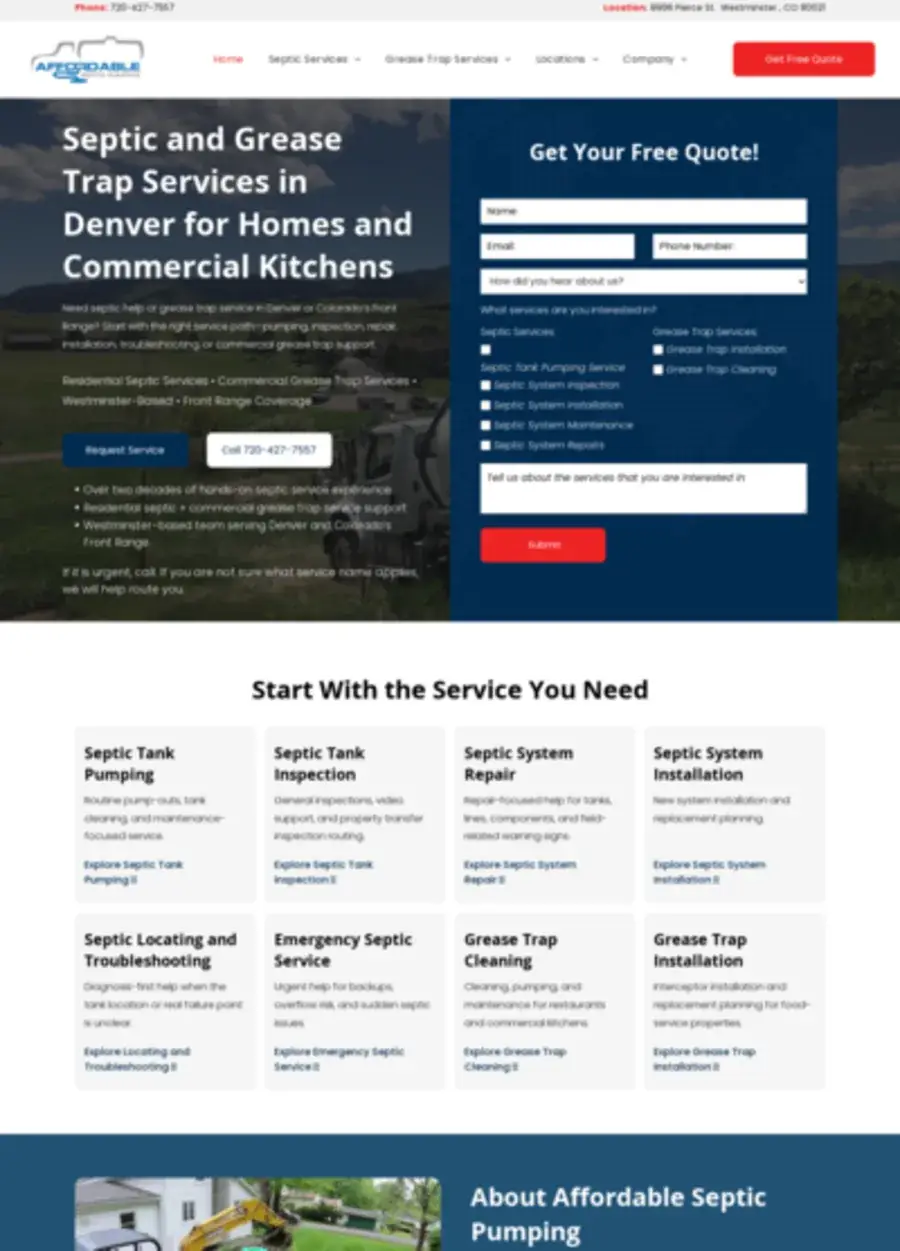
Septic service with call-first layout for urgent jobs.
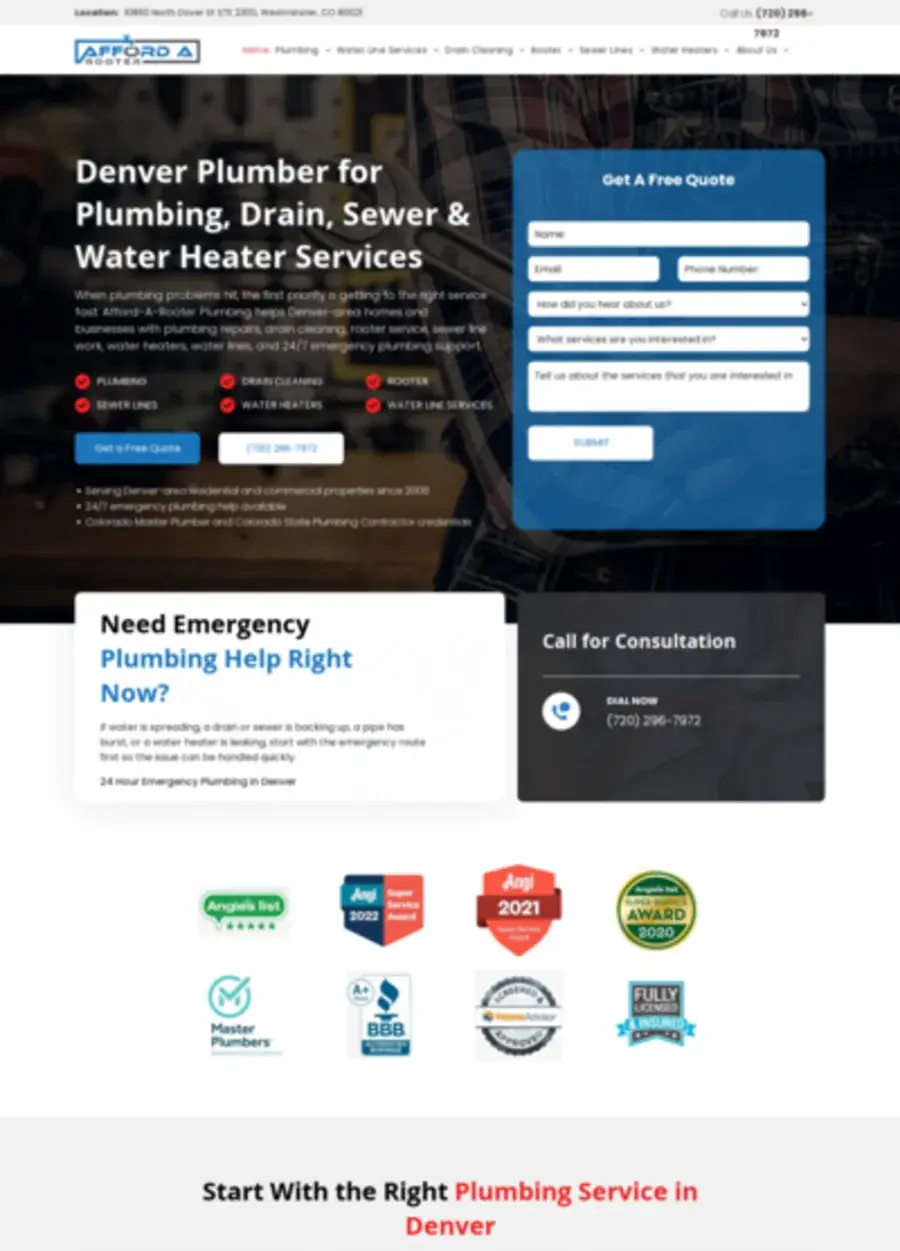
Emergency plumbing with service list and dispatch-oriented calls to action.
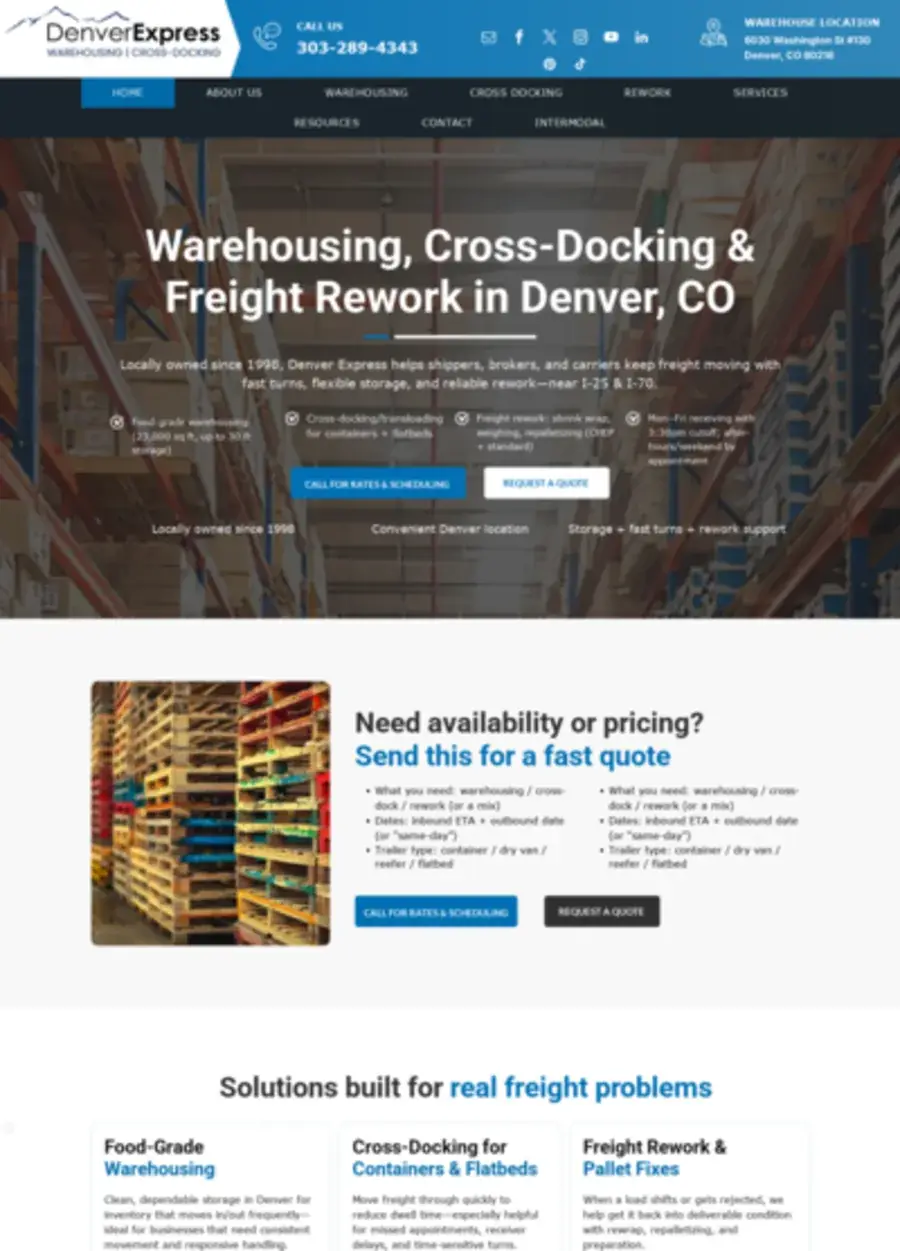
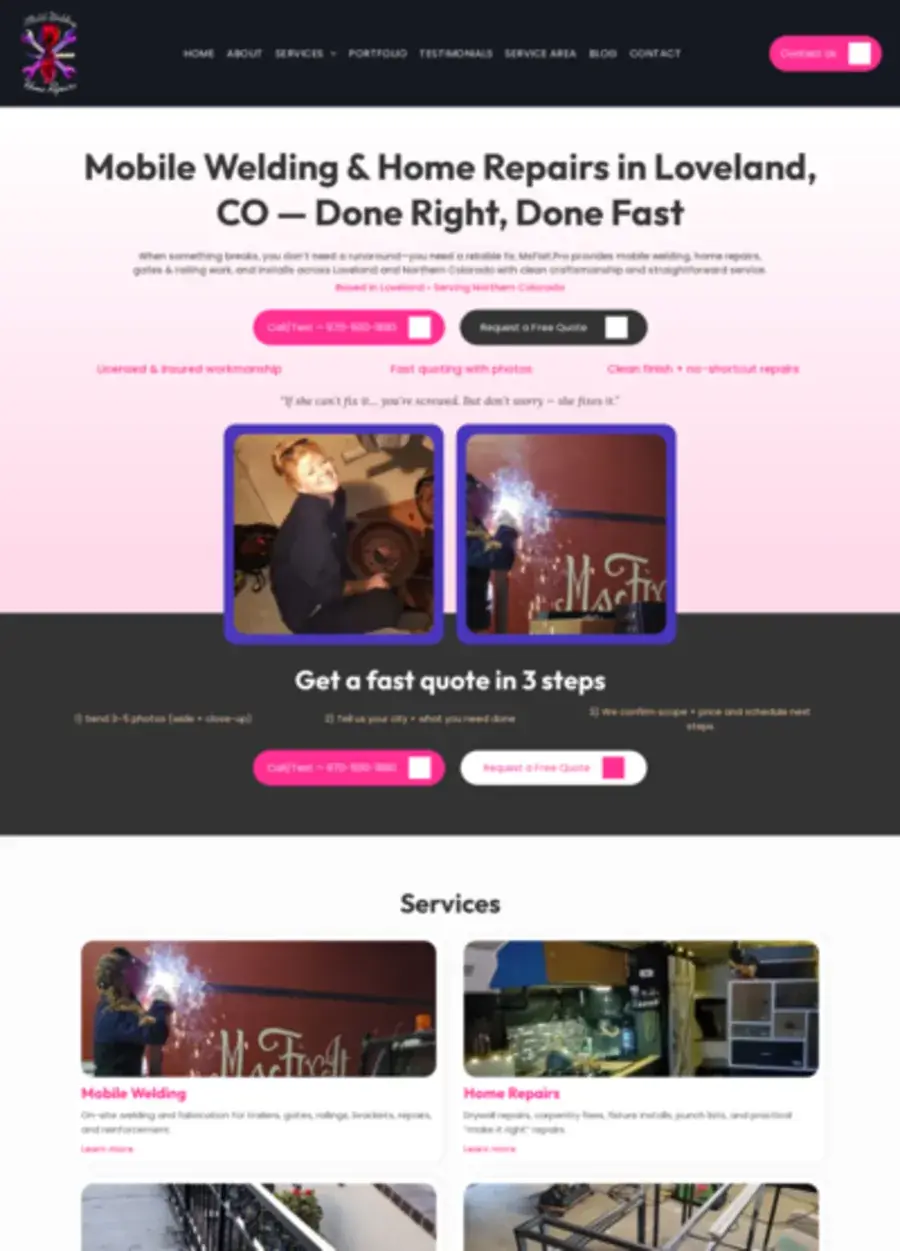
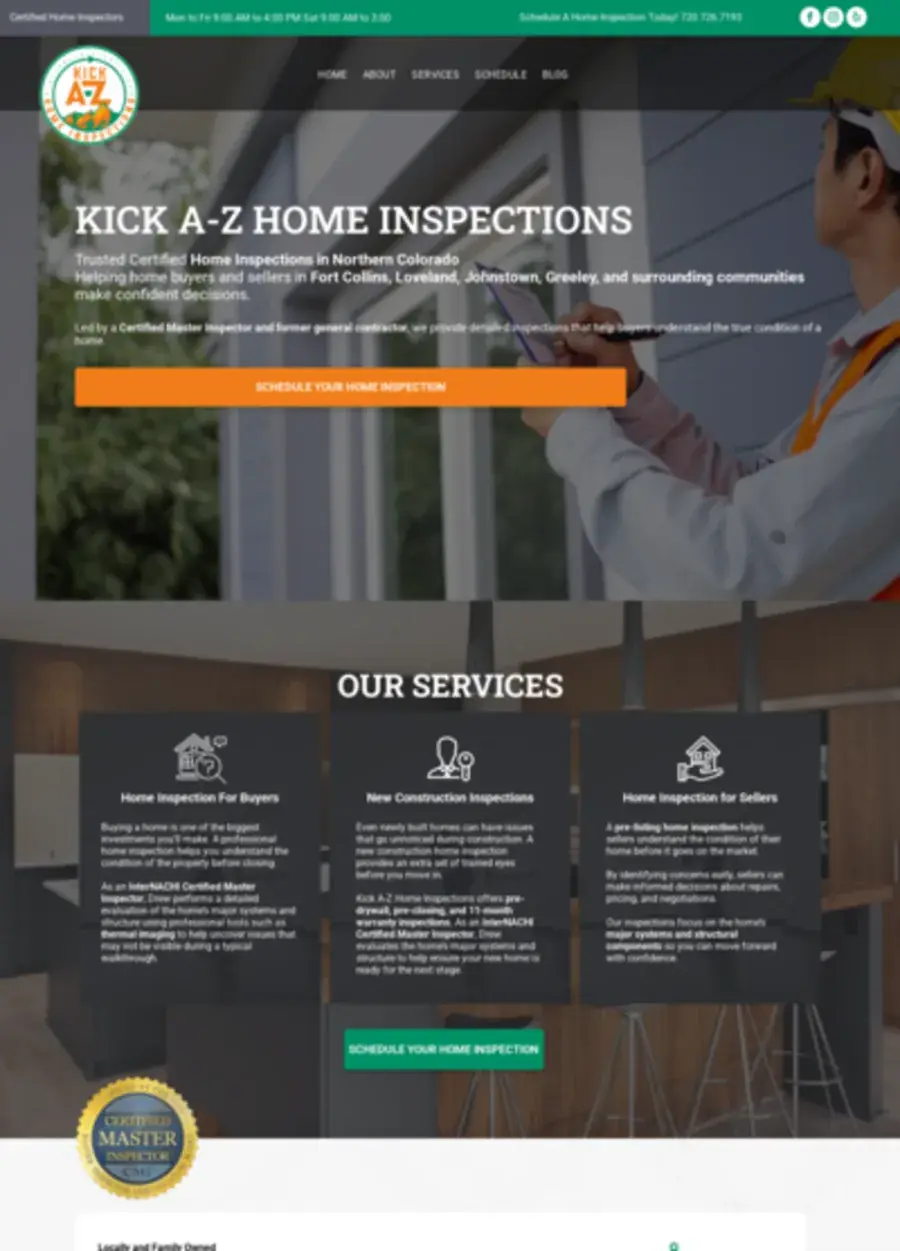
Inspection service built for agent referrals and buyer scheduling.
Questions
Adjacent verticals
These verticals share buying cycles, trust signals, or local search behaviour, so the programs borrow from each other.
Local
Our office is at 400 E Simpson St in Lafayette, and most of this work runs across the Denver and Boulder metros.
Vertical strategy and local strategy are the same project once a business has a service area. The mechanics on this page decide what a page says. The location tier decides where it competes, and local SEO handles proximity, prominence, and relevance as three separate levers.
Lafayette, Colorado. Serving the Denver metro, the Boulder Valley, and Northern Colorado.
Start with a diagnosis. You get the roadmap and the quote before anyone builds anything.