
Documented patient consent
Testimonials, case photos, and any identifiable patient content require documented authorization before use in marketing, consistent with patient privacy regulation.

Dental practice growth
Patients search dentists in two completely different modes, urgent and elective, and each needs its own path from search to chair.
The vertical
Dental search intent splits sharply into two modes that require different content and different response times. Emergency intent, such as a broken tooth or severe pain, needs to be answered immediately with clear same-day availability and an easy way to call or book right now. Elective intent, such as researching a cosmetic procedure or considering a new practice, tolerates a longer research phase and rewards content depth over speed.
Insurance and in-network status quietly filter most of the market before a patient ever calls. A large share of searchers are checking, explicitly or implicitly, whether a practice takes their plan before they consider anything else about it, and a site that does not answer that question early loses patients who never bother to inquire further.
New patient acquisition and hygiene recall are two different economic engines running side by side. Acquiring a new patient carries a real cost, and the return on that cost depends heavily on whether the practice keeps that patient coming back for regular hygiene visits, since recall visits are what make a patient relationship profitable over years rather than a single appointment.
Cosmetic dentistry and implants represent the highest-value intent in this category and behave more like the med spa or elective surgery search pattern than like routine dental care. These patients research more, compare more providers, and expect to see credentials, technology, and results before committing, which makes this a segment worth marketing distinctly from general and family dentistry.
Demand behaviour
Dental searchers split into urgent, same-day intent and slower elective research, and each needs a different response.
Emergency queries, phrases involving pain, a broken tooth, or an urgent problem, spike at unpredictable times including evenings and weekends, and the practice that answers fastest with a clear same-day path wins that patient regardless of brand reputation. This intent is almost entirely local and immediate, and a slow-loading page or a buried phone number costs real patients in the moment.
Elective and cosmetic intent behaves very differently, with a longer research window during which patients compare providers, look at technology and credentials, and often check insurance participation before they ever pick up the phone. Insurance and in-network filtering happens early in this process, frequently as one of the first things a searcher checks, which means that information needs to be easy to find rather than buried in a policies page.
Existing patients search differently than new ones. Recall reminders and rebooking behavior tend to respond well to direct, time-based prompts rather than open-ended marketing, while new patient searches respond more to trust signals like reviews, technology, and clear service descriptions. A single homepage message rarely serves both audiences well.
Constraints
Patient privacy rules limit how testimonials, imagery, and remarketing can be used, and that shapes what marketing content is even possible.
Health privacy regulation restricts how patient information, images, and even the fact that someone is a patient can be used in marketing without explicit, documented authorization. This affects testimonials, before and after photography for cosmetic cases, and remarketing lists built from website visitors, all of which need consent and careful handling rather than default marketing tactics borrowed from other industries.
Treatment plan acceptance, the moment a patient agrees to proceed with recommended care, happens in the operatory rather than online, but marketing still shapes it by setting expectations about cost, process, and outcomes before the patient ever sits in the chair. Overpromising online creates friction at that in-person moment instead of easing it.
Testimonials, case photos, and any identifiable patient content require documented authorization before use in marketing, consistent with patient privacy regulation.
Building ad audiences from site visitors who may be existing patients requires care, since visit history and health context are protected information, not standard marketing data.
In-network status and pricing information must be current and accurate, since patients rely on it early in their decision and inaccuracies create real disputes.
Cosmetic and implant marketing should describe process and typical outcomes honestly rather than promising results that vary by individual case and clinical judgment.
Where the leverage is
We run nine pillars. These are the ones that move this vertical, and the reason each one earns its place.
Splitting emergency and elective content into distinct pages captures both urgent same-day searches and slower cosmetic research without diluting either.
Explore SEOInsurance participation and same-day availability are exactly the kind of direct factual questions patients ask that answer engines can surface if the content is structured to answer them.
Explore AEOA booking flow that separates emergency requests from routine and cosmetic consultations gets urgent patients to a chair faster while qualifying elective interest properly.
Explore Application FrontendsHigh-value cosmetic and implant intent justifies targeted paid campaigns distinct from the broader, lower-cost general dentistry audience.
Explore Paid MediaSeparate emergency content from routine and cosmetic content entirely, with a same-day booking path and phone number prominent for urgent queries, since emergency patients decide within minutes based on speed and availability, not brand research.
Conversion
New patients convert through fast answers to urgent needs or through trust built during longer cosmetic research, while existing patients convert through recall.
Emergency conversion depends almost entirely on speed and clarity. A visible phone number, a clear same-day statement, and a page that loads fast on mobile matter more than persuasive copy when someone is in pain and comparing several practices in the span of a few minutes.
Elective and cosmetic conversion depends on trust built over a longer window, including credentials, technology used in the practice, and honest descriptions of process and recovery. These patients often want to see a consultation offered before committing to a treatment plan, similar to other elective health categories.
The final treatment plan acceptance happens in the operatory, but marketing sets the stage for it by managing expectations about cost and process beforehand, which reduces sticker shock and hesitation at the point where the actual case is presented.
A same-day request option separate from routine scheduling gets urgent patients into contact quickly, which is the primary factor emergency searchers weigh.
Clear, current information about accepted insurance plans and typical costs removes the biggest early filter that otherwise stops interested patients from calling.
A dedicated consultation path for high-value cosmetic and implant cases mirrors the longer decision cycle these patients go through and captures interest before they choose a competitor.
Scheduled reminders tied to hygiene intervals keep existing patients returning on a predictable cadence, which sustains the economics behind new patient acquisition.
Live work
Real properties, running in production. Click any of them and judge the work directly.
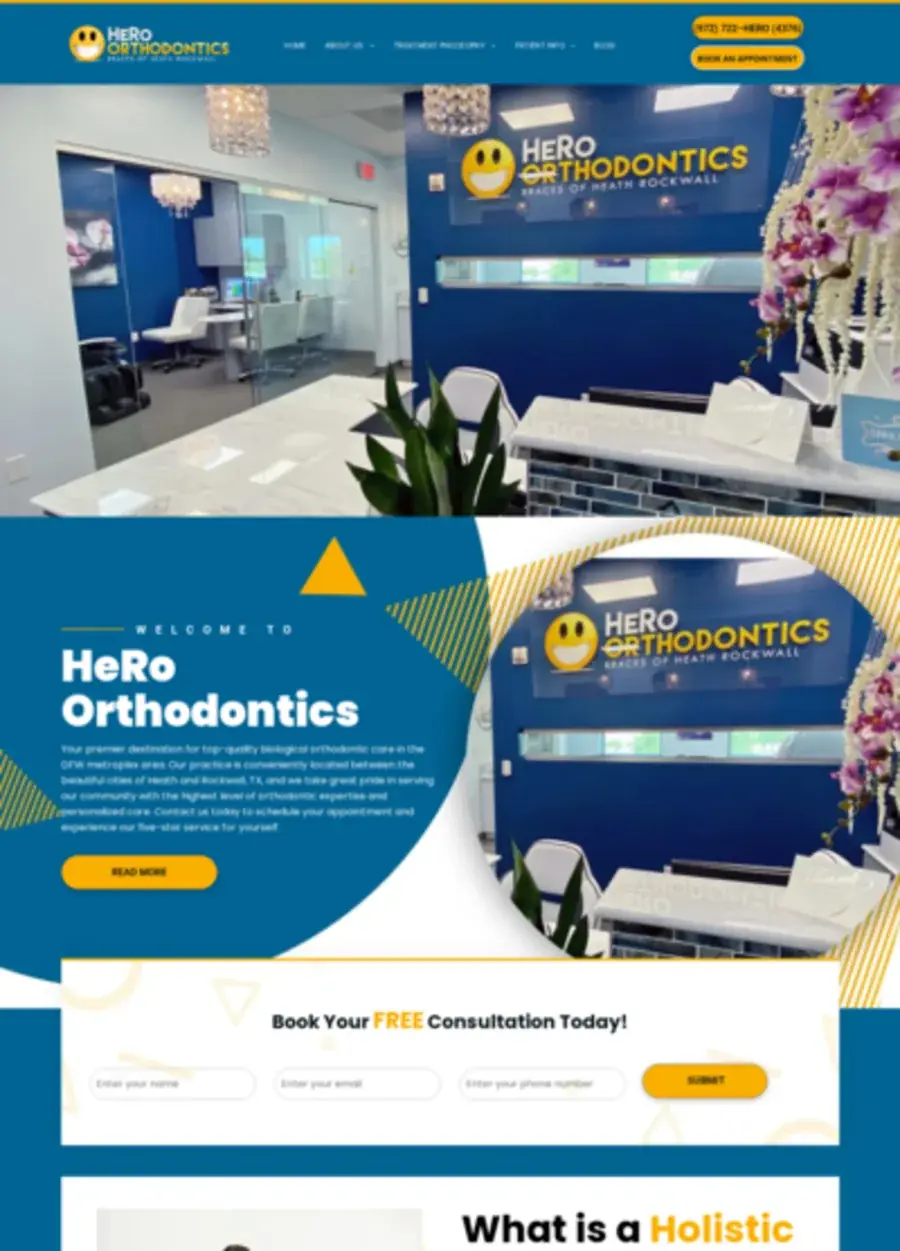
Multi-location orthodontic practice with per-office landing structure.

General and cosmetic dentistry with new patient intake front and centre.
Questions
Adjacent verticals
These verticals share buying cycles, trust signals, or local search behaviour, so the programs borrow from each other.
Local
Our office is at 400 E Simpson St in Lafayette, and most of this work runs across the Denver and Boulder metros.
Vertical strategy and local strategy are the same project once a business has a service area. The mechanics on this page decide what a page says. The location tier decides where it competes, and local SEO handles proximity, prominence, and relevance as three separate levers.
Lafayette, Colorado. Serving the Denver metro, the Boulder Valley, and Northern Colorado.
Start with a diagnosis. You get the roadmap and the quote before anyone builds anything.