
Licensure limits geography
Marketing and sales activity should map to the states where the agent or agency actually holds an active license. Advertising into unlicensed states creates real regulatory exposure regardless of digital reach.

Quotes, retention, cross-sell
The first quote search is a commodity fight against comparison sites. The real business is renewal, retention, and the second and third policy.
The vertical
Most insurance shopping starts with a comparison, not a relationship, and the search results for personal lines terms are dominated by large aggregator sites that exist purely to arbitrage that comparison behaviour. An independent or captive agency competing for the same generic quote keyword is usually competing against a company with a much larger media budget and a business model built entirely around that one moment. Winning there requires a different approach than outbidding the aggregators: owning branded, local, and advisor-specific search where the aggregators have no advantage, and building enough trust before the click that the visitor chooses a person over a form.
Whether an agency is captive to one carrier or independent and appointed with several changes what can honestly be marketed. A captive agent can speak with full authority about one carrier's products but cannot compare across carriers, while an independent agency's whole value proposition is the ability to shop several carriers on the client's behalf. Marketing copy has to reflect which model the agency actually operates under, since claiming comparison shopping ability the agency does not have is both misleading and a fast way to lose client trust.
State insurance licensure adds a real constraint. An agent can only sell and discuss coverage in states where they hold a license, and regulators in most states restrict specific language, particularly around claim examples, guaranteed savings, and comparisons to other carriers' pricing. Personal lines, like auto and home, and commercial lines, like general liability and workers compensation, also behave as separate businesses: personal lines are higher volume and shorter cycle, commercial lines involve more consultative selling, larger premiums, and a buyer who is often a business owner comparing coverage adequacy rather than just price.
The economics of an agency are back-loaded. A new personal lines policy is often written at low or no initial profit once acquisition cost is counted, and the real return comes from multi-year retention and from cross-selling additional policies, home alongside auto, umbrella alongside both, life alongside everything. That means marketing cannot stop at the first sale. Renewal communication, cross-sell prompts, and a client experience that earns advocacy are as much a growth channel as new-customer acquisition, and often a more profitable one.

Demand behaviour
Insurance search behaviour is split between price-driven aggregator traffic and trust-driven local or advisor search.
Generic terms like cheap car insurance or home insurance quotes are dominated by aggregator sites and large national carriers, and an individual agency rarely wins that specific fight on price-oriented terms alone. These searchers are often anonymous shoppers doing a first pass comparison and have not yet decided they want a relationship with an agent at all, so this traffic converts best through low-friction quote tools rather than long-form trust content.
A different, more valuable search pattern exists around local and advisor-anchored terms: insurance agent near me, [agent name] insurance, best insurance agent in [city]. This searcher has often already decided they want a person to talk to, sometimes prompted by a referral or a renewal shock from a prior carrier, and is looking to confirm credibility rather than compare five quotes anonymously. This is where an independent agency's website, reviews, and local reputation carry real weight against the aggregators.
Commercial lines search behaves differently again: business owners search around specific risk types, general liability for contractors, workers comp for restaurants, and often start the process after a triggering event like a new lease requirement, a lender requirement, or a claim from a previous policy. This is a slower, more consultative search pattern, and content that speaks to the specific industry's coverage needs converts better than generic commercial insurance messaging.
Constraints
State licensure and regulated claim language shape what an agency can honestly say about coverage and price.
Agents can only discuss and sell coverage in states where they are licensed, and most state insurance departments restrict specific advertising language, including guaranteed savings claims, direct price comparisons to named competitors, and language that could be read as a coverage promise before underwriting is complete. Claims of savings or lowest price need substantiation and often disclaimers, and any comparison content must stay accurate to the agency's actual appointment status.
The distinction between captive and independent status has to be represented honestly in marketing. A captive agent should not imply multi-carrier shopping ability, and an independent agency should be clear about which carriers it is actually appointed with rather than implying access to the entire market. Coverage details and claim language also need to avoid stating anything that could be read as binding advice before a policy is actually underwritten and issued.
Marketing and sales activity should map to the states where the agent or agency actually holds an active license. Advertising into unlicensed states creates real regulatory exposure regardless of digital reach.
Language implying guaranteed or specific savings amounts is restricted in most states and needs substantiation or disclaimers when used. Describe potential savings as variable and dependent on individual underwriting factors.
A captive agent's marketing should not imply the ability to shop multiple carriers, and an independent agency should represent its actual carrier appointments accurately rather than implying unlimited market access.
No marketing content should state or imply coverage is bound or guaranteed before underwriting and policy issuance are complete, since this can create real liability if a claim is later disputed.
Where the leverage is
We run nine pillars. These are the ones that move this vertical, and the reason each one earns its place.
Owning local and branded search is the realistic path to visibility given that generic quote terms are structurally dominated by aggregators with far larger media budgets, and local SEO is where an individual agent's reputation can actually outrank a national comparison site.
Explore SEOPaid search for generic personal lines terms competes directly against aggregators and large carriers on cost per click, so budget performs better aimed at branded terms, local intent, and commercial lines niches where competition is thinner and buyer intent is higher.
Explore Paid MediaCoverage and comparison questions, like what does umbrella insurance actually cover, are the kind of factual queries answer engines surface directly, and agencies that answer them clearly and accurately build citation-worthy authority the aggregators rarely bother to build.
Explore AEOBecause agency profit depends on renewal and cross-sell rather than the first sale, tracking retention rate and cross-sell attach rate by source is more important to growth planning than first-year quote volume alone.
Explore AnalyticsBy not fighting them for generic price-shopping traffic and instead owning branded, local, and advisor-anchored search where trust in a specific person matters more than a comparison table, then converting that trust into long-term retention and cross-sell.
Conversion
The first quote is often the least profitable transaction an agency makes, so conversion strategy has to look past it toward retention and cross-sell.
For price-anchored, aggregator-style traffic, conversion depends on speed and simplicity: a fast quote form or click-to-call, minimal friction, and quick follow-up, since this shopper is comparing multiple sources in one sitting and will move on if the process feels slow. For trust-anchored local and advisor traffic, conversion looks more like a consultative process, with an actual conversation about coverage needs mattering more than instant price.
Renewal periods are a distinct and predictable conversion moment. A rate increase notice from a prior carrier is one of the most reliable triggers for someone to actively shop again, and agencies that time outreach and content around typical renewal cycles catch a meaningfully warmer audience than cold prospecting.
Cross-sell conversations, bundling home with auto, adding umbrella or life coverage, are usually easier and more profitable than acquiring a brand-new client, because the trust and data already exist. Building a deliberate cross-sell touchpoint into the post-sale client experience, not just leaving it to chance at renewal, materially changes agency profitability.
A short, low-friction online quote form or click-to-call option converts anonymous, price-anchored traffic that will not tolerate a long consultative process before seeing a number.
Visitors who found the agency through local or branded search generally want a real conversation about coverage needs, and a scheduling tool or direct phone line performs better here than a generic form.
Proactively contacting clients and prospects around typical policy renewal windows catches people at their most receptive moment for comparing coverage and price, well before a rate increase notice arrives.
A structured post-sale check-in that reviews existing coverage and surfaces bundling or additional policy options turns already-trusting clients into cross-sell conversions without needing new acquisition spend.
Live work
Real properties, running in production. Click any of them and judge the work directly.
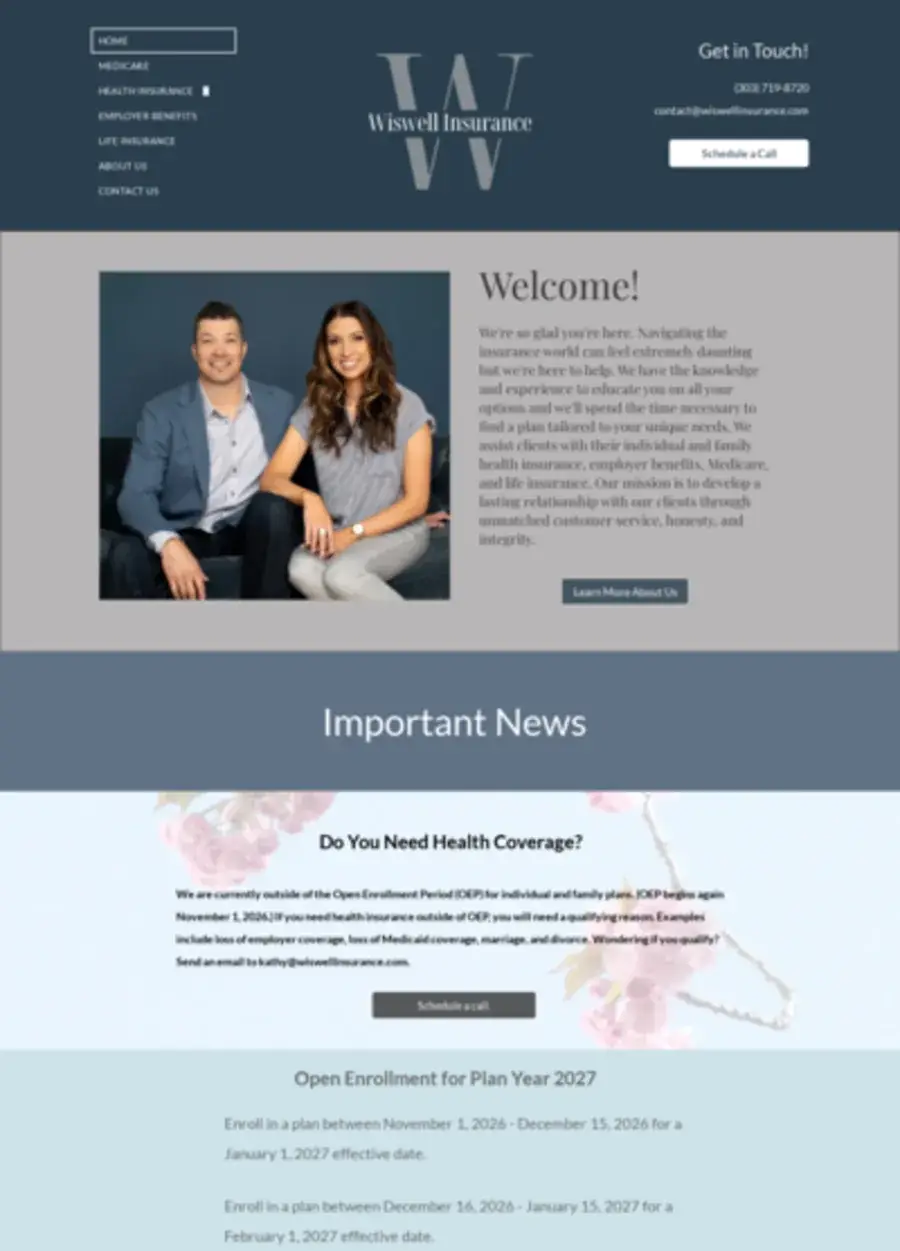
Independent agency with line-of-business pages and quote intake.
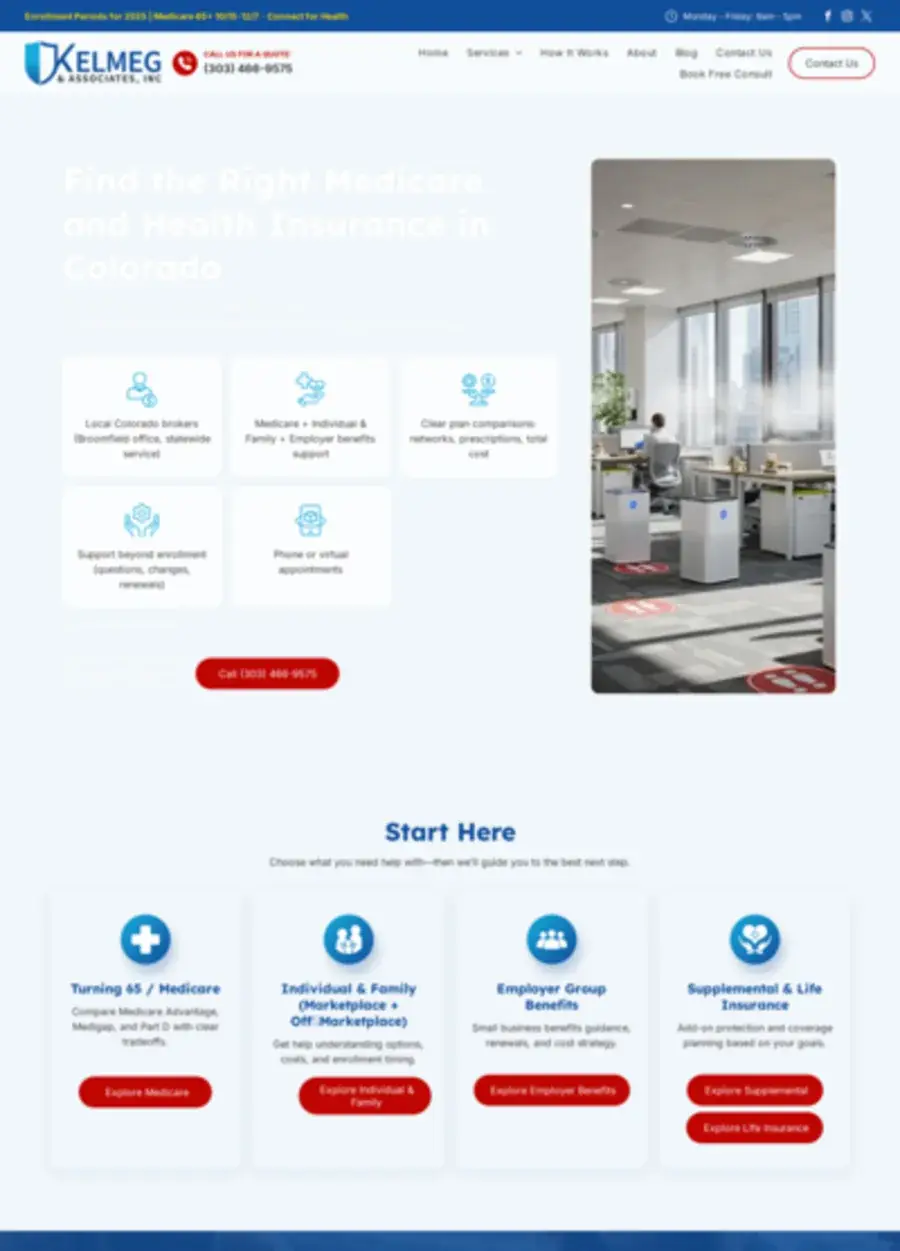
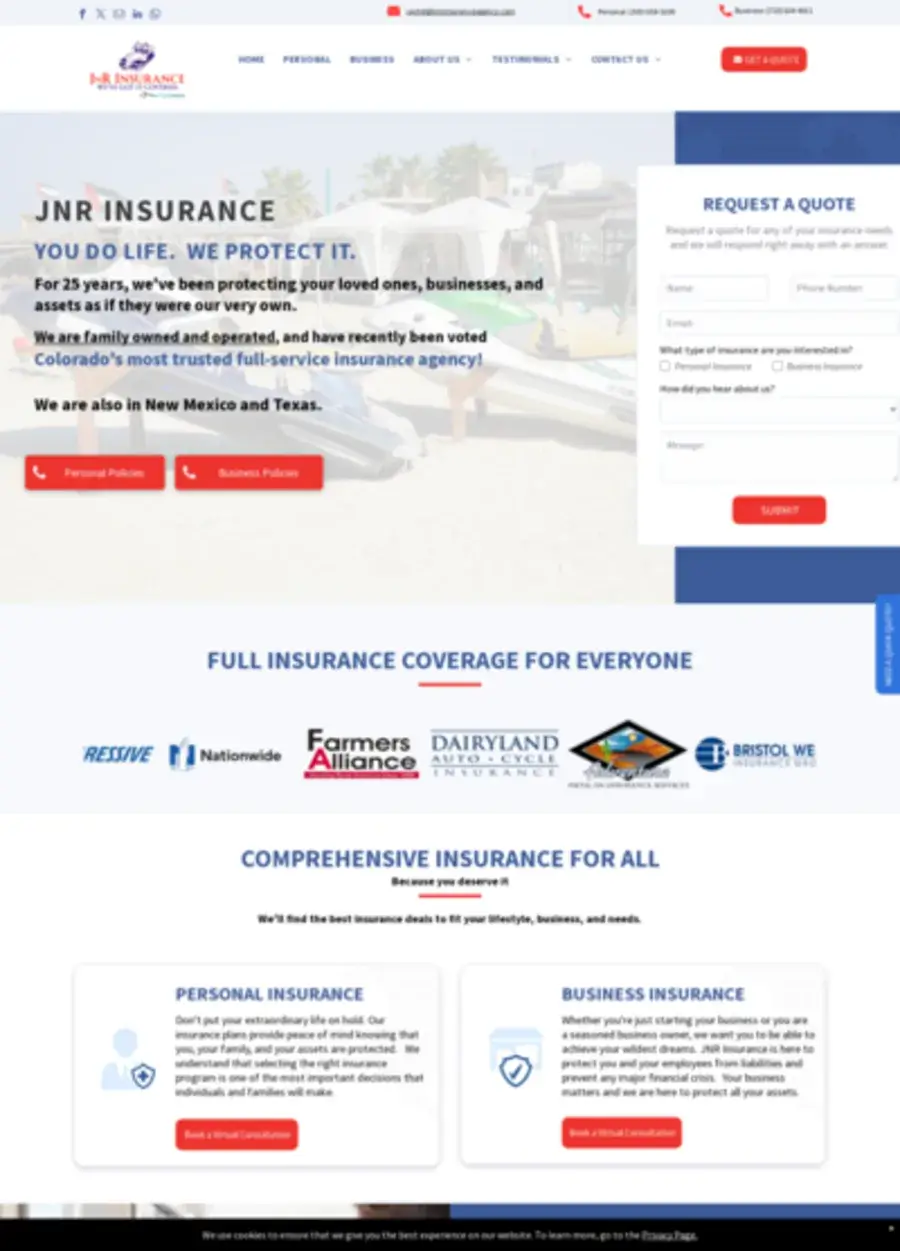
Commercial and personal lines with per-product quote paths.
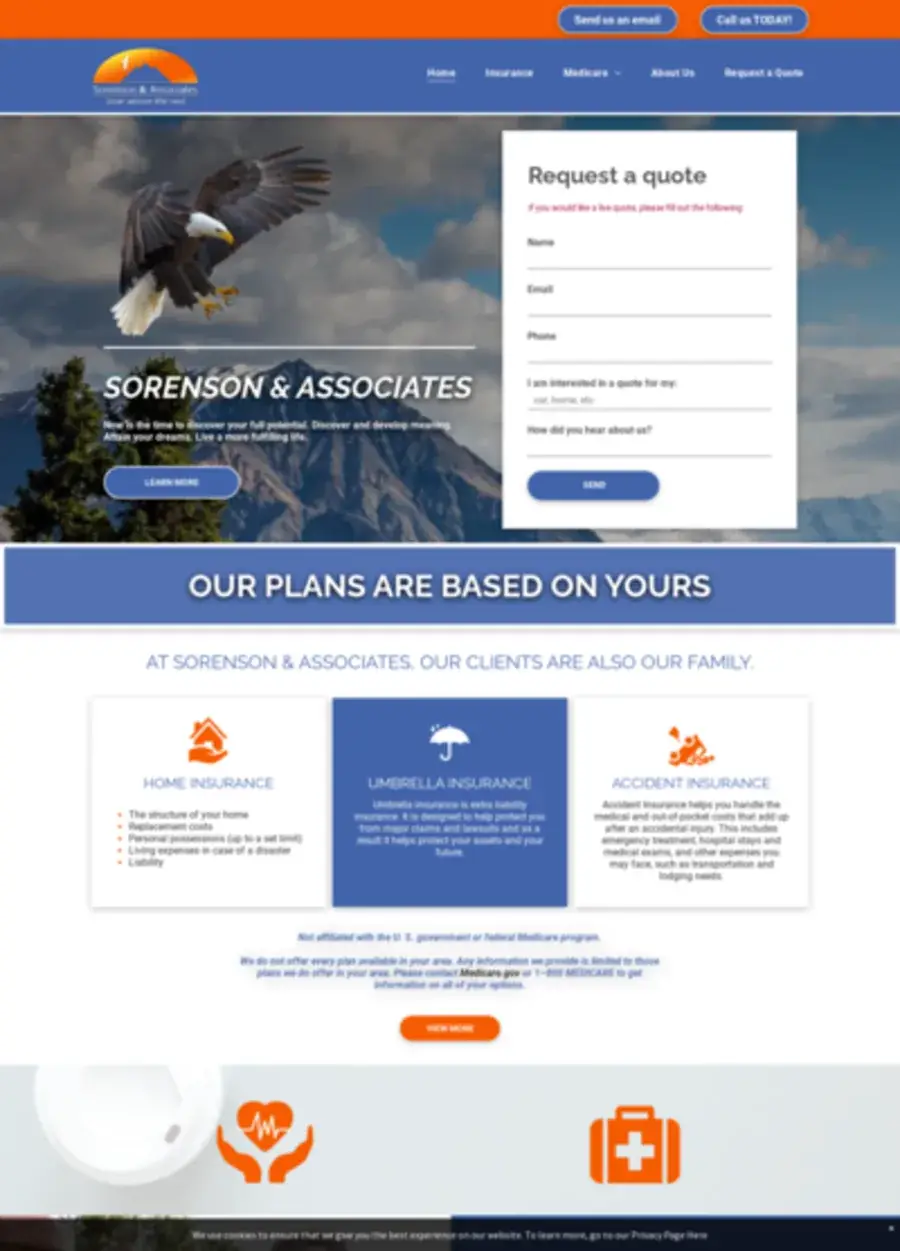
Family agency site organised around the coverage a visitor asks for.
Questions
Adjacent verticals
These verticals share buying cycles, trust signals, or local search behaviour, so the programs borrow from each other.
Local
Our office is at 400 E Simpson St in Lafayette, and most of this work runs across the Denver and Boulder metros.
Vertical strategy and local strategy are the same project once a business has a service area. The mechanics on this page decide what a page says. The location tier decides where it competes, and local SEO handles proximity, prominence, and relevance as three separate levers.
Lafayette, Colorado. Serving the Denver metro, the Boulder Valley, and Northern Colorado.
Start with a diagnosis. You get the roadmap and the quote before anyone builds anything.