Skip to content
Lingows
Faceted iceberg with a deep foundation lattice, for professional services firms selling expertise, for Professional services.

Expertise, proposals, capacity

Marketing for firms whose brand is really the reputation of the people

Accounting, consulting, engineering, and architecture firms sell judgment, not a product page. Growth depends on being cited as the expert, not just found.

The vertical

What actually shapes growth for professional services firms

Buying professional services is a judgment purchase, not a product purchase. A prospective client evaluating an accounting firm, a consulting practice, or an engineering firm is trying to assess competence and fit for a problem that is often unique to them, and that assessment happens through demonstrated expertise more than through advertising claims. Content that shows how the firm thinks about a class of problem, rather than what the firm sells, is what actually moves a buyer from aware to interested, and firms that publish generic service copy instead of real expertise tend to be invisible in this evaluation.

Decisions rarely rest with one person. A consulting engagement, an audit relationship, or an engineering contract typically involves a committee spanning finance, operations, and sometimes legal, each weighing different criteria, and the sales cycle stretches from weeks to many months as a result. Marketing has to produce material that different stakeholders can use to build internal consensus, not just a single compelling pitch to one buyer, and it has to sustain a prospect's attention across a cycle long enough that most leads go quiet for stretches before resurfacing.

Because these buyers are actively researching a problem, not browsing a category, thought leadership carries unusual weight, and increasingly that research happens through answer engines summarizing and citing sources rather than through a list of search results. A firm whose published thinking gets cited when someone asks an AI assistant how to approach a specific problem gains a credibility advantage that is very hard for a competitor to buy through advertising. This makes structured, genuinely substantive content a growth lever in a way it is not for many other industries.

The brand of a professional services firm is inseparable from the reputations of its partners or principals. Clients hire a firm partly on the strength of the institution and partly, often mostly, on confidence in the specific person who will lead the engagement. That means marketing has to build visibility for named experts, not just the firm logo, and a proposal or scoping conversation is usually the real moment of conversion, since most firms are capacity-constrained and need qualified opportunities more than raw lead volume.


Consultant presenting to colleagues in a modern professional services office

Demand behaviour

How these customers search and decide

Professional services buyers research a problem in depth before they ever look for a firm to solve it.

Early-stage search is almost entirely problem-oriented rather than vendor-oriented: how to structure a cost segregation study, what triggers an ASC 606 revenue recognition change, how to scope a structural retrofit. These queries reflect someone trying to understand their own situation well enough to brief internal stakeholders, and firms that answer this kind of question thoroughly earn attention long before the buyer starts comparing named vendors.

Once the buyer moves toward vendor evaluation, search shifts to credibility verification: named-partner searches, firm plus industry combinations, and requests for case examples or past engagement types. At this stage the buyer is not comparing marketing claims so much as checking whether the firm has genuinely done this specific kind of work before, which makes detailed, honest description of past engagement types more persuasive than broad claims of capability.

A meaningful share of engagements now begin with a question asked to an AI assistant rather than a traditional search engine, particularly for niche technical or regulatory questions where a direct, well-sourced answer is more useful than a page of links. Firms whose content is structured clearly enough to be extracted and cited by these systems are showing up inside that first research moment even when the prospect never visits their site directly, which makes citation a real, if less visible, top-of-funnel channel.

  • Early research queries are problem-shaped, not vendor-shaped, and precede any firm comparison
  • Named-partner and named-firm searches appear once a buyer moves to evaluation
  • RFP and proposal requests often arrive after weeks or months of quiet, self-directed research
  • Committee buying means the same opportunity may see multiple distinct search sessions from different stakeholders
  • AI assistant queries for niche technical or regulatory questions are an increasingly common entry point

Constraints

The rules this marketing has to live inside

Credibility claims in professional services need to be accurate and specific, since overclaiming is easy to catch and expensive to a reputation-driven business.

Many professional disciplines, accounting and engineering in particular, carry licensing bodies and professional conduct standards that restrict certain claims, including implied guarantees of outcomes like audit results or regulatory approvals, and require accuracy in describing credentials and certifications. Claims about specific past client results generally require client consent and are often described in de-identified or aggregated terms rather than named case studies unless a client has explicitly agreed to be referenced.

Because these firms sell judgment and trust, vague or inflated claims of expertise tend to be actively damaging rather than neutral. A buyer doing real due diligence, and buyers in this category almost always do, can usually tell the difference between a firm that has genuinely done a specific kind of work and one that is describing generic capability, so accuracy about scope of experience is both an ethical requirement and a practical one.

No implied outcome guarantees

Language implying a guaranteed audit result, regulatory approval, or engagement outcome should be avoided, both because it is often restricted by professional conduct standards and because outcomes in these engagements genuinely depend on facts specific to each client.

Client references need consent

Any specific mention of a client's identity, industry detail specific enough to identify them, or engagement result requires that client's explicit agreement. Absent that, describe experience in de-identified or aggregated terms.

Credentials must be accurate

Professional certifications, licenses, and designations listed in marketing materials must reflect current, verifiable status. Misstating credentials is both a compliance risk and a fast way to lose credibility with a diligent buyer.

Scope claims should be specific

Claims of expertise should describe the actual type and scale of work the firm has done rather than broad, unverifiable capability statements, since sophisticated buyers evaluate specificity as a proxy for genuine experience.

Where the leverage is

The pillars that matter most for professional services firms

We run nine pillars. These are the ones that move this vertical, and the reason each one earns its place.

AEO

Buyers researching a technical or regulatory problem increasingly get their first answer from an AI assistant, and a firm whose published thinking is structured to be cited in that answer gains visibility at the exact moment a buyer is forming their view of the problem, well before any vendor comparison begins.

Explore AEO

SEO

Long-form, problem-oriented content that ranks for the specific questions buyers ask during early research builds durable authority and captures a stage of the buying process that generic service pages never reach.

Explore SEO

Design

Because a proposal or scoping document is frequently the actual conversion moment, the clarity and professionalism of that material, along with the firm's site and credential presentation, directly affects whether a committee of stakeholders feels confident recommending the firm internally.

Explore Design

Social

Partner and principal visibility, built through consistent professional publishing and commentary in the right venues, transfers individual credibility to the firm and supports the referral and reputation dynamics that drive a large share of new engagements in this category.

Explore Social

How should a professional services firm market itself when the buying decision involves a committee?

Produce substantive, problem-specific content that different stakeholders can use to build internal consensus, make named partner expertise visible, and treat the proposal or scoping conversation as the real conversion moment rather than the first inquiry.

  • Publish genuinely useful analysis of the problems clients actually face, not generic service descriptions
  • Give partners and principals individual visibility, since clients hire people as much as firms
  • Prepare the proposal and scoping process as a distinct, high-effort conversion stage
  • Track opportunities across a long cycle rather than expecting fast form-to-close conversion

Conversion

What actually turns demand into booked revenue

For a capacity-constrained firm, a smaller number of well-qualified opportunities is worth more than a large volume of generic leads.

The proposal or scoping conversation is usually where a professional services engagement is actually won or lost, since this is where the firm demonstrates specific understanding of the client's situation rather than general capability. Marketing's job is to get the right opportunities to that conversation, not to try to close the deal through a website form, and RFP responses in particular deserve significant, dedicated effort given how much they typically influence the final decision.

Because most firms have finite delivery capacity, chasing raw lead volume can actively hurt the business by consuming time on unqualified inquiries that were never going to convert or were never a good engagement fit. A marketing approach built around clear positioning and genuinely useful content tends to pre-qualify better than broad-reach advertising, since it attracts people who already recognize the specific type of problem the firm solves.

Referral relationships, from past clients, from complementary firms like attorneys or bankers referring accounting or consulting work, remain a significant source of new engagements throughout this category, and a firm's visible thought leadership and case-specific credibility make it easier for a referrer to feel confident making that introduction.

High-effort proposal process

A proposal that demonstrates specific understanding of the client's situation, rather than a templated capability overview, is usually the deciding factor once a firm has made it to the shortlist. Treating this as a core marketing deliverable, not just a sales task, improves win rates.

RFP responsiveness

For firms that regularly see formal RFPs, having a strong, reusable core of credential and methodology material ready to adapt quickly shortens response time without sacrificing the specificity that RFP evaluators are looking for.

Named-expert visibility

Partner and principal bios, publications, and speaking history give a buying committee confidence in the specific people who will lead the engagement, which matters as much as the firm's institutional reputation.

Qualification before intake

Clear positioning and problem-specific content filter out poor-fit inquiries before they consume delivery team time, which matters more for a capacity-constrained firm than maximizing raw inquiry volume.

Live work

Professional services firms we have built for

Real properties, running in production. Click any of them and judge the work directly.

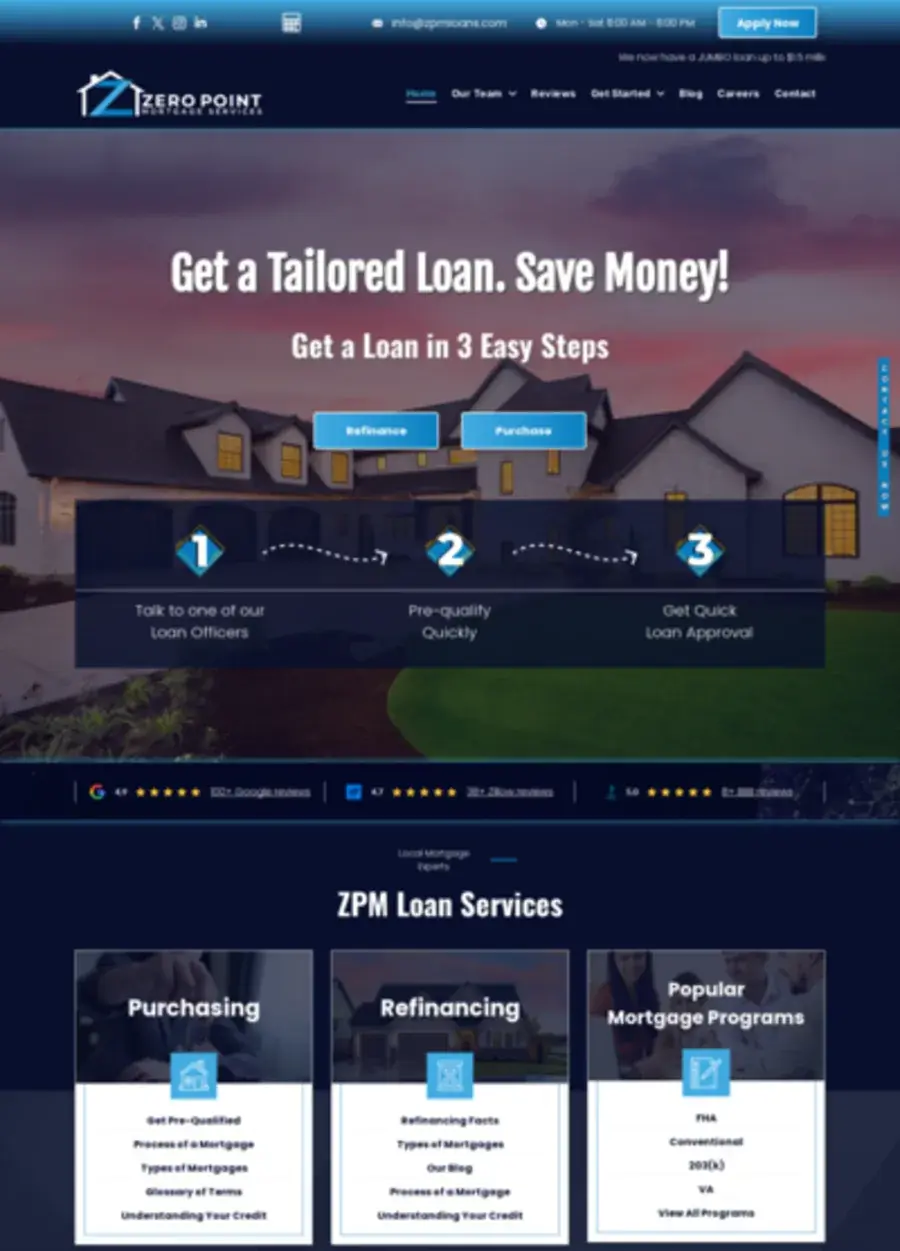
  • Screenshot of the ZPM Loans website homepage

    ZPM Loans

    Lending brand with product explanation and application handoff.

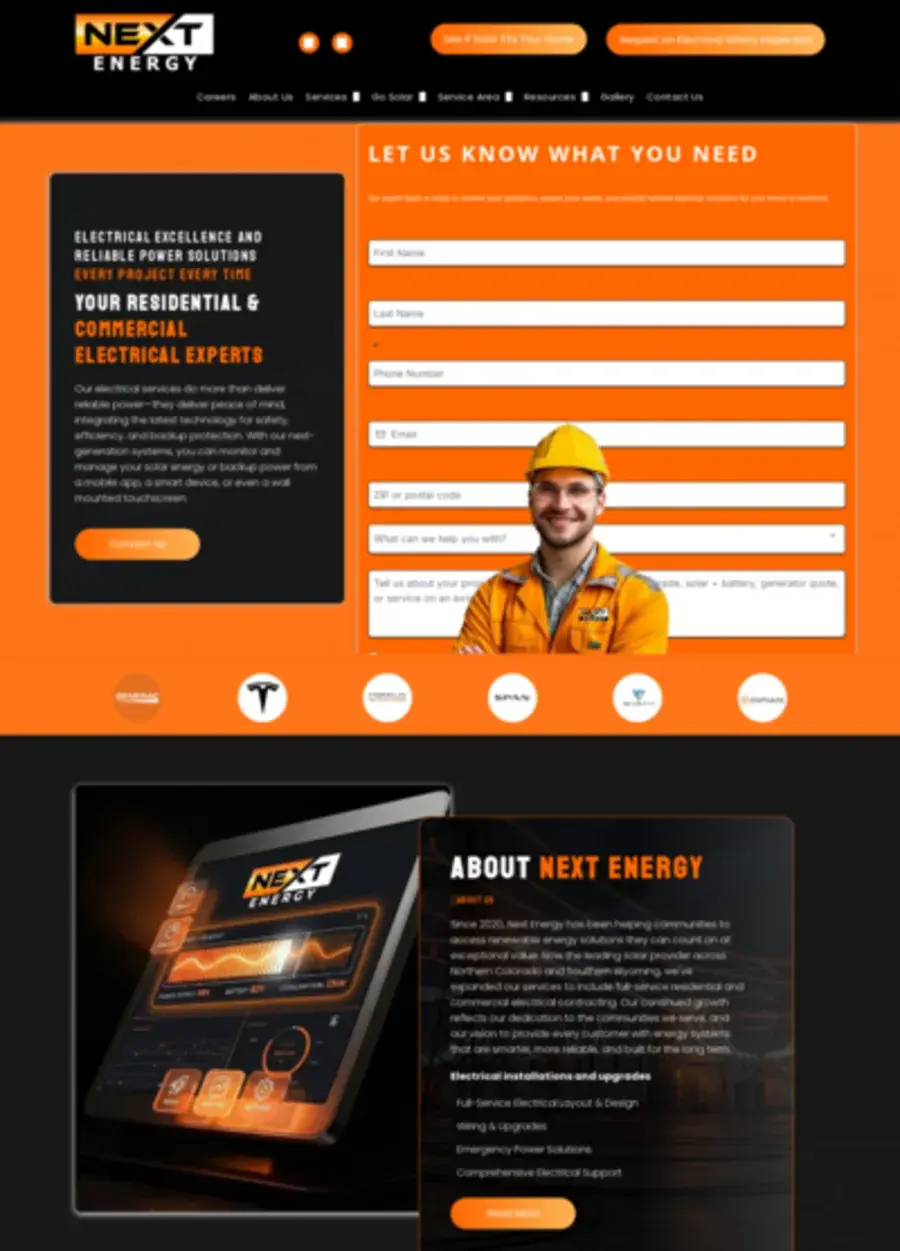
  • Screenshot of the Next Energy website homepage

    Next Energy

    Energy consultancy with service offer and enquiry routing.

  • Screenshot of the Wyo Energy website homepage

    Wyo Energy

    Applied AI positioning for an energy operator, built as a real frontend.

    wyoenergy.ai
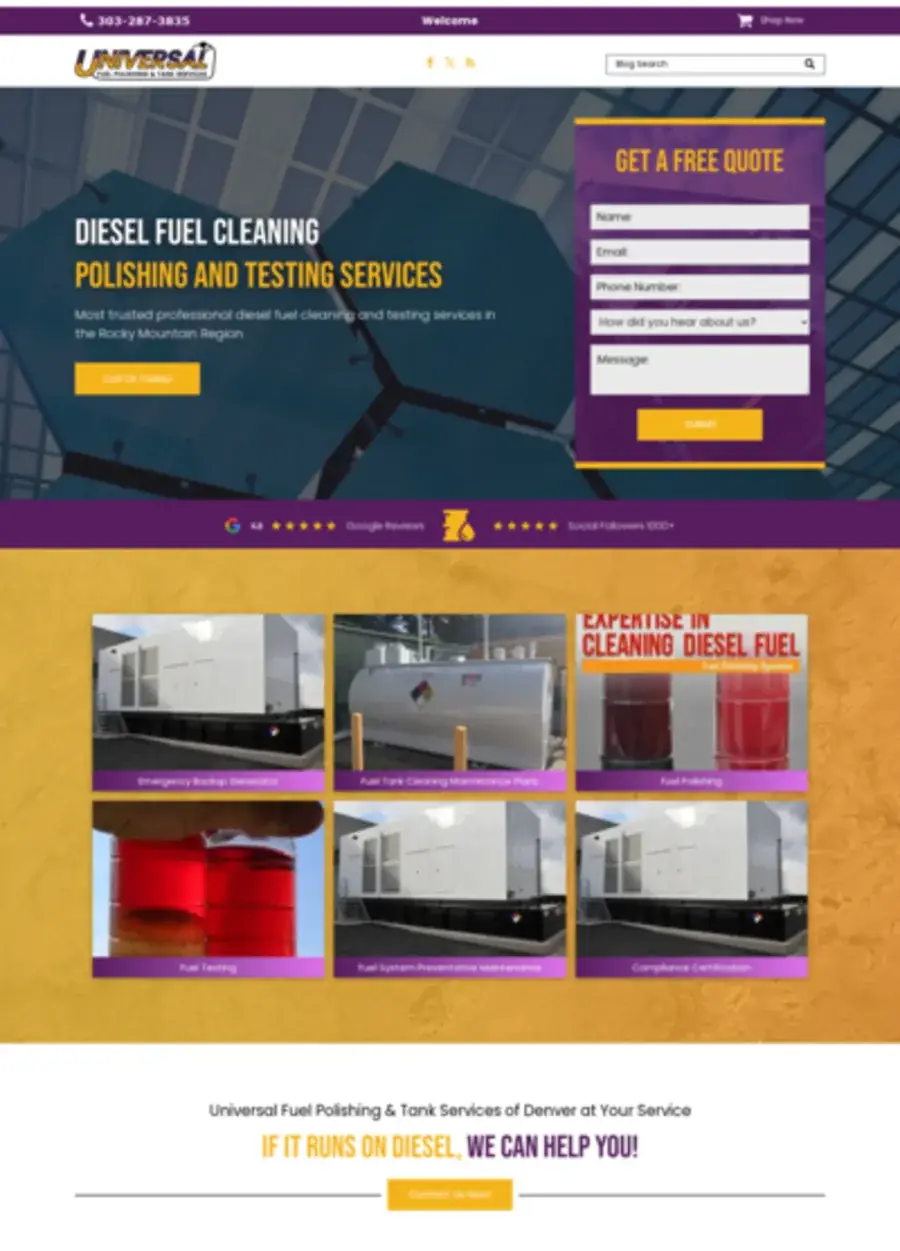
  • Screenshot of the Universal FTS website homepage

    Universal FTS

    Field and technical services with capability-led navigation.

  • Screenshot of the Aerofield Services website homepage

    Aerofield Services

    Aviation ground services with a capability and coverage structure.

  • Screenshot of the Jet Research website homepage

    Jet Research

    Aviation research and advisory with a technical audience in mind.

See the full portfolio

Questions

Professional services firms ask us these

Local

Professional services firms along the Front Range

Our office is at 400 E Simpson St in Lafayette, and most of this work runs across the Denver and Boulder metros.

Vertical strategy and local strategy are the same project once a business has a service area. The mechanics on this page decide what a page says. The location tier decides where it competes, and local SEO handles proximity, prominence, and relevance as three separate levers.

Lafayette, Colorado. Serving the Denver metro, the Boulder Valley, and Northern Colorado.

Run this properly for your professional services business

Start with a diagnosis. You get the roadmap and the quote before anyone builds anything.