

Local SEO For Denver Service Businesses
Winning local search in a competitive Denver market takes stacked, correctly executed signals, not just claiming a Google Business Profile.
10 min readLingows Team
Read the post
Learn 21 Denver blog post ideas to improve local SEO, attract neighborhood searches, and boost small-business visibility through content and GBP signals.
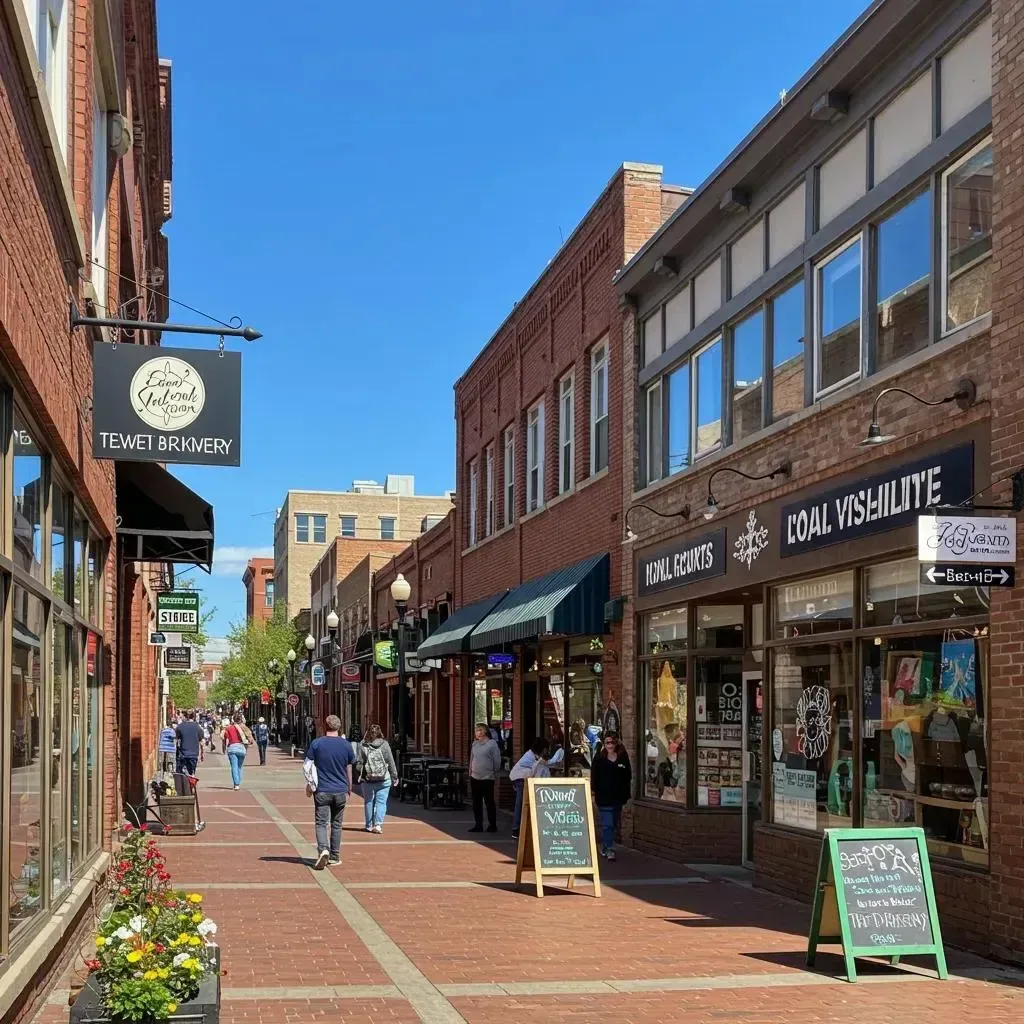
!Brick pedestrian street with shops, people strolling on a sunny day.
Local visibility is the difference between a Denver business that waits for customers and one that consistently attracts them through search. This guide explains how localized blog content, on-page local SEO, and strategic use of Google Business Profile signals work together to generate real local searches for Denver small businesses. You’ll learn practical on-page optimizations, a curated list of 21 Denver-focused post ideas, step-by-step local keyword research methods, AI-assisted workflows for scaling hyper-local content, citation and backlink tactics tailored to Denver, and the KPIs to measure results. The strategies focus on neighborhood-level relevance—RiNo, Cherry Creek, Capitol Hill and beyond—so each post maps to intent and local discovery mechanics. Read on for checklists, copy-ready schema examples, EAV tables, and actionable prompts that turn blog ideas into measurable local traffic and customer leads.
!Woman typing on laptop at table by window; notes and coffee nearby.
Optimizing a Denver blog for local SEO means aligning content, on-page markup, and local signals so search engines connect your business with nearby searchers. The mechanism is simple: combine clear local keywords, structured data, and GBP-aligned content to strengthen local relevance and ranking chance. The benefit is measurable—higher local impressions, improved local pack placement, and visitors with real purchase intent. Below is a concise checklist designed for quick implementation that doubles as a featured-snippet-ready answer.
These steps set the stage for more detailed on-page techniques and demonstrate why local schema and consistent NAP are critical, which leads into the specific HTML and content patterns below.
Essential on-page techniques for Denver blogs combine semantic keyword placement, structured markup, and local entity mentions to create clear signals for both users and search engines. Title tag templates that work well follow a pattern: Primary Keyword – Neighborhood | Business Type – Denver, CO, which balances relevance and click appeal. Headers should use hierarchical H1→H2→H3 structure with neighborhood and service entities included naturally, and body copy should mention nearby landmarks or transit nodes to create local context. Images must include descriptive filenames and ALT text that reference the neighborhood and service (for example, "capitol-hill-dog-grooming.jpg" with ALT "dog grooming in Capitol Hill Denver"). Implementing BlogPosting schema with author, date, and location properties helps search platforms understand that the article targets Denver readers, which naturally supports local packs and knowledge panel signals.
Google Business Profile (GBP) acts as a core discovery and ranking signal for local queries by connecting your website content to an entity that Google recognizes as local. The mechanism is content → GBP post → user interaction: blog posts that answer local queries can be repurposed into GBP updates that generate clicks and calls, which in turn strengthen local relevance. Practically, add a short summary and link to the blog as a GBP post after publishing, and prompt customers for reviews that reference the service and neighborhood to boost relevance. This workflow—publish, post to GBP, request a review—creates a feedback loop where on-site content enhances GBP performance and GBP engagement feeds back into local ranking signals. The next section provides a compact EAV table comparing on-page optimization elements and actionable examples for Denver blogs.
Title Tag
Meta Description
Header Structure
Local Schema
Image ALT
This comparison clarifies which on-page elements to prioritize and how each one translates into discoverable local signals for Denver searches.
Lingows Media offers a practical example of how professional support can implement these GBP and on-page tactics at scale for Denver businesses. Their Local SEO and Google Strategies service focuses on aligning GBP optimizations with neighborhood-targeted blog content and schema implementation, providing hands-on assistance for title/meta templates, BlogPosting schema insertion, and GBP content workflows. Working with an experienced local SEO provider can speed implementation, help audit citation consistency, and ensure GBP posts and blog content are synchronized to deliver local traffic. If you prefer to DIY, follow the checklist above and use the EAV table templates to audit your pages; if you need implementation support, a focused Local SEO service can operationalize the steps and reduce common technical gaps.
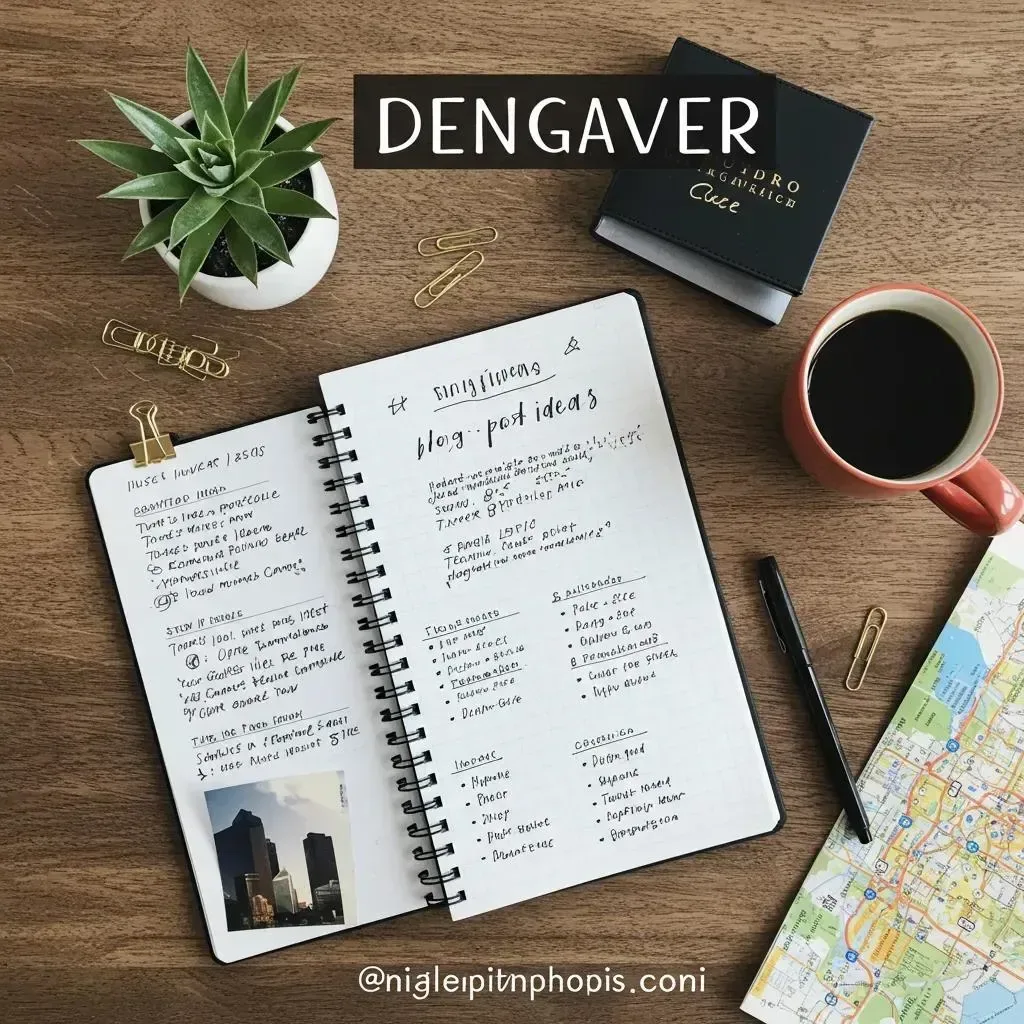
!Notebook with handwritten notes, coffee, succulent, map, and small book on wooden table.
Targeted post ideas transform a blog from generic content into a local traffic engine that answers real Denver queries. Below are 21 ideas grouped by intent and written to capture neighborhood, event, and service queries; each idea maps to local intent and can be adapted into a short series or seasonal campaign. The list is designed for easy execution with headline templates and quick outlines.
These categories generate the following specific post ideas:
The next EAV table maps these ideas to target intent and sample keywords for quick editorial planning.
Choose neighborhoods to target based on customer density, commercial activity, and search interest—these criteria maximize impact by matching content to where your audience searches. High-priority neighborhoods for many Denver small businesses include RiNo for creative/food scenes, Cherry Creek for retail shoppers, LoDo for nightlife and tourism, and Capitol Hill for dense residential services. A neighborhood guide post can be structured with a quick overview, top businesses, transit access, parking tips, and a local events calendar to deliver practical value. Start with one or two high-relevance neighborhoods and scale coverage into a region-based cluster of posts that interlink, which helps search engines understand your local topical authority and encourages users to explore nearby service pages.
Local events and news provide timely hooks that attract searchers seeking immediate information, maps, schedules, and nearby services. Use an editorial calendar to track recurring events—marathons, festivals, market seasons—and plan preview posts (what to expect), day-of guides (where to park, transit tips), and recap posts (photo galleries, local partners). Newsjacking is effective when done responsibly: add unique local value, such as interviews with organizers or a roundup of participating vendors, instead of repeating headlines. Event-driven content often earns backlinks and local shares, and those signals feed back into local authority for subsequent evergreen posts, so maintain an events content rhythm that complements neighborhood guides.
Local keyword research for Denver blogs combines neighborhood modifiers, intent signals, and tools that reveal what Denver searchers actually type. The approach is to identify base service terms, append neighborhood variants, validate intent with SERP analysis, and prioritize long-tail queries with high conversion potential. Using a prioritized keyword list ensures your editorial calendar targets queries that deliver both traffic and local customers.
The EAV table below demonstrates how to prioritize Denver keywords for content planning.
Keyword
Local Search Volume (Est.)
Intent
Recommended Action
"dog groomer RiNo"
Medium
Transactional
Create neighborhood service page + blog spotlight
"best coffee near Union Station"
High
Discovery
Publish neighborhood list with maps and photos
"emergency plumber Denver"
Medium
Transactional
Write problem-solution post + GBP optimization
A practical tool stack for Denver keyword research blends free and paid resources to capture local nuance: Google Search Console for existing query data, Google Autocomplete and "People also ask" for user intent, and a crawler or SEO platform for volume and competitive metrics. BrightLocal or similar local platforms expose GBP queries, while a general SEO tool helps estimate volume and difficulty. Start with a seed list of services, append neighborhood names, and capture modifiers like "near me", "hours", "price", and "best". Export candidate keywords into a spreadsheet and tag each by neighborhood and intent to create an editorial priority matrix. This approach turns raw query data into prioritized post ideas that match Denver search behavior.
Long-tail local keywords are often service + neighborhood + modifier (e.g., "affordable mesh network installer Capitol Hill"). Find these by combining seed terms with neighborhood lists, using autocomplete, and reviewing local forums and community pages for phrasing. Validate each candidate by checking the SERP—if local businesses dominate, the keyword likely converts; if directories or Q&A dominate, consider an informational post that funnels to service pages. Prioritize long-tail keywords with demonstrable intent and manageable competition, then map each to a content format: FAQ-style posts for informational intent, comparison posts for evaluative queries, and checklist posts for transactional/near-transactional searches. This mapping ensures every long-tail target has a clear post type and conversion path.
AI and automation speed ideation, outline generation, and localization while preserving human oversight for accuracy and E-E-A-T. The mechanism is automation for scale—AI produces draft outlines and localized variations, human editors inject local nuance and verify facts, and the combined workflow yields more high-quality local posts per month. Benefits include faster topic generation, consistent voice using templates, and data-driven prioritization based on keyword signals. Below is an example AI-assisted workflow to produce neighborhood posts reliably.
These steps create a repeatable production line that balances speed and local authenticity, and the next paragraph covers the specific benefits and limitations to watch for when integrating AI.
AI-driven local content generation offers clear benefits: it accelerates ideation by producing dozens of neighborhood-tailored headlines in minutes, it improves scalability by generating consistent outlines and meta suggestions, and it supports personalization by swapping in neighborhood facts or venue names programmatically. An example use case is automating a weekly "What’s On This Weekend" series across ten neighborhoods—AI drafts the base content, and local staff add event confirmations and photos. However, risks include factual errors, stale GBP data, and a lack of hyper-local nuance—so human verification and E-E-A-T checks remain essential. Balancing automation with local editorial oversight preserves credibility while maximizing throughput.
Integrate AI by using targeted prompts that include neighborhood names, business type, and user intent, then augment AI output with local datasets like GBP insights and event calendars. Sample prompt structure: "Generate an SEO-optimized outline for [service] in [neighborhood], include H2s for costs, top picks, transit, and FAQs." After AI generates content, run a checklist: verify local facts, add citations or interviews, implement BlogPosting schema, and optimize on-page title/meta for local modifiers. Maintain an editorial QA checklist that reviews factual accuracy, tone, and local links before publishing. This hybrid workflow ensures AI increases output without sacrificing the local signals that make content discoverable in Denver searches.
Lingows Media’s positioning in AI-driven marketing highlights how firms can operationalize automation for local content at scale. Their expertise in AI-driven local content solutions demonstrates a practical path for businesses that want to automate ideation and scale neighborhood-targeted posts while maintaining hands-on editorial controls. Working with a provider experienced in both AI workflows and Denver local SEO can accelerate rollout and ensure technical elements like schema and GBP integration are handled correctly.
Local backlinks and citations build authority by showing search engines that your Denver business is referenced across trusted local resources. The mechanism is referral signals: links from chambers, event sites, and neighborhood blogs act as endorsements that strengthen local relevance. Prioritize partnerships and directories that are highly relevant to your neighborhood or industry, and aim for a mix of citations with consistent NAP and contextual backlinks from local partners.
Below is an outreach-focused table showing candidate citation and backlink sources for Denver.
Local citations improve SEO by reinforcing NAP consistency and connecting your blog content to an entity that Google understands as locally relevant. The mechanism works when citation data across directories matches your GBP and site contact details; consistent citations reduce confusion in knowledge panels and the local pack. An audit workflow includes exporting existing citations, identifying inconsistent entries, correcting NAP mismatches, and noting opportunities to add missing citations in neighborhood directories. After cleaning citations, publish blog posts that reference local partners and events—these posts are natural anchors for outreach that generate contextual backlinks and citations.
Local SEO Optimization for Retailers: Increasing Traffic and Conversions
The Purpose of the presented research is to substantiate the importance of the local optimization of the retailer’s business for search engines to increase organic traffic; to represent insights and give practical recommendations for retailers regarding local optimization of their business in Google as part of an effective marketing strategy; to create the typical valid data micromarking (by the example of the Ukrainian retailer), which will contribute to an advantageous placement in the Local Pack in comparison with competitors, and increase organic traffic and conversion.
Business optimization in the digital age: Insights and recommendations, A Natorina, 2020
High-value Denver backlink targets include the local Chamber of Commerce, major neighborhood association sites, event organizers, tourism and culture sites, and reputable local news outlets. Prioritize sources that serve your customer segments and offer contextual mentions—an event recap on a neighborhood blog is more valuable than a generic directory link. Outreach should be personalized, offering a short guest post, event collaboration, or resource exchange that benefits the host. Track outreach using a simple CRM or spreadsheet and aim for quality over quantity, focusing on three to five high-impact partnerships per quarter.
Lingows Media’s approach to citations and local backlinks emphasizes targeted partnerships and citation audits to fix inconsistencies and secure contextual links. Their local backlink strategy pairs outreach templates with on-site content that naturally attracts local mentions, which is an efficient way to scale authority in Denver’s neighborhood-focused search environment.
Measuring Denver blog SEO requires tracking local-specific KPIs and maintaining a cadence for content refreshes and technical audits. The mechanism is data-driven iteration: monitor what works, double down on formats that convert, and update underperforming posts based on keyword shifts and GBP insights. The benefit is measurable improvement in local impressions, conversions, and GBP engagement.
Key performance indicators to monitor include:
Track KPIs that directly tie blog activity to local discovery and actions: local pack rankings for target keywords, GBP interactions (calls, direction requests, clicks), organic traffic segmented by Denver location, and conversion metrics from blog-driven landing pages. Establish benchmarks—such as improving impressions for target local keywords by 15% quarter-over-quarter—and use those to prioritize refreshes and new content. Regularly cross-reference GBP insights with on-site analytics to understand which blog posts are driving GBP engagement and which need optimization.
A pragmatic update cadence balances freshness with resource constraints: monitor top-performing posts monthly for quick stat updates and GBP linking, perform quarterly content audits for "almost-ranking" posts that need keyword expansion or new local examples, and schedule an annual strategy review for structural updates, schema enhancements, and major rewrites. Prioritize updates for posts that show traffic drops, have outdated local facts, or serve high-intent queries where conversion can be improved. This cadence ensures local relevance is maintained while allowing time for new topics and neighborhood expansion.
Consistent measurement and cadence close the loop between content creation and local business outcomes, ensuring your Denver blog remains a reliable source of customers and local visibility.
Local backlinks are crucial for enhancing the SEO of Denver blogs as they signal to search engines that your content is relevant and authoritative within the local context. When reputable local websites link to your blog, it boosts your credibility and helps improve your rankings in local search results. These backlinks can come from local chambers of commerce, neighborhood blogs, or event organizers. Building a diverse backlink profile not only enhances visibility but also drives targeted traffic from users interested in local content.
Social media is a powerful tool for promoting your Denver blog content. By sharing your posts on platforms like Facebook, Instagram, and Twitter, you can reach a wider audience and engage with local communities. Use local hashtags and tag relevant businesses or events to increase visibility. Additionally, consider creating visually appealing graphics or short videos that summarize your blog content, making it more shareable. Engaging with followers through comments and messages can also foster a sense of community and encourage more visits to your blog.
Common mistakes in local SEO for Denver blogs include neglecting to optimize Google Business Profile (GBP) listings, failing to use local keywords effectively, and not maintaining consistent NAP (Name, Address, Phone) information across platforms. Additionally, overlooking the importance of local backlinks and citations can hinder your visibility. It's also crucial to avoid creating generic content that doesn't resonate with local audiences. Instead, focus on producing tailored, neighborhood-specific content that addresses the unique needs and interests of your Denver community.
Measuring the effectiveness of your local SEO strategies involves tracking key performance indicators (KPIs) such as local keyword rankings, Google Business Profile interactions, and organic traffic from Denver. Tools like Google Analytics can help you monitor traffic sources and user behavior on your blog. Additionally, regularly reviewing GBP insights will provide data on how users are engaging with your profile. Setting specific goals, such as increasing local traffic by a certain percentage, can also help gauge the success of your SEO efforts over time.
To maintain relevance, it's advisable to update your Denver blog regularly. A good practice is to refresh high-performing posts monthly, ensuring that statistics, local events, and GBP links are current. Conducting quarterly content audits can help identify posts that need keyword expansion or new local examples. Additionally, scheduling an annual review for major updates ensures that your content remains aligned with evolving local trends and search behaviors. This consistent updating strategy helps keep your blog fresh and engaging for your audience.
Boosting your Denver small business visibility through local SEO strategies can significantly enhance your online presence and attract more customers. By implementing targeted blog content, optimizing your Google Business Profile, and utilizing effective keyword research, you can create a robust local search strategy that meets user intent. Take the next step in elevating your business by exploring our comprehensive resources and expert services tailored for Denver entrepreneurs. Start transforming your local search performance today!
Winning local search in a competitive Denver market takes stacked, correctly executed signals, not just claiming a Google Business Profile.
A working topic cluster pairs one deep pillar page with focused subpages linked together, and it consistently outranks scattered one-off posts.
Crawlability, rendering, and indexability form the floor for every other SEO effort. Fix these first or nothing else compounds.
We diagnose first, then architect, then build. Call 720-378-4266 or send the project details.